Whisker Litter-Robot 4: Specs, Features, Pros & Cons
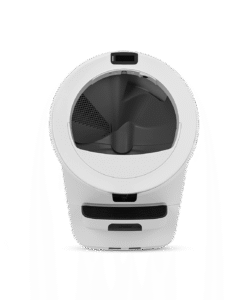
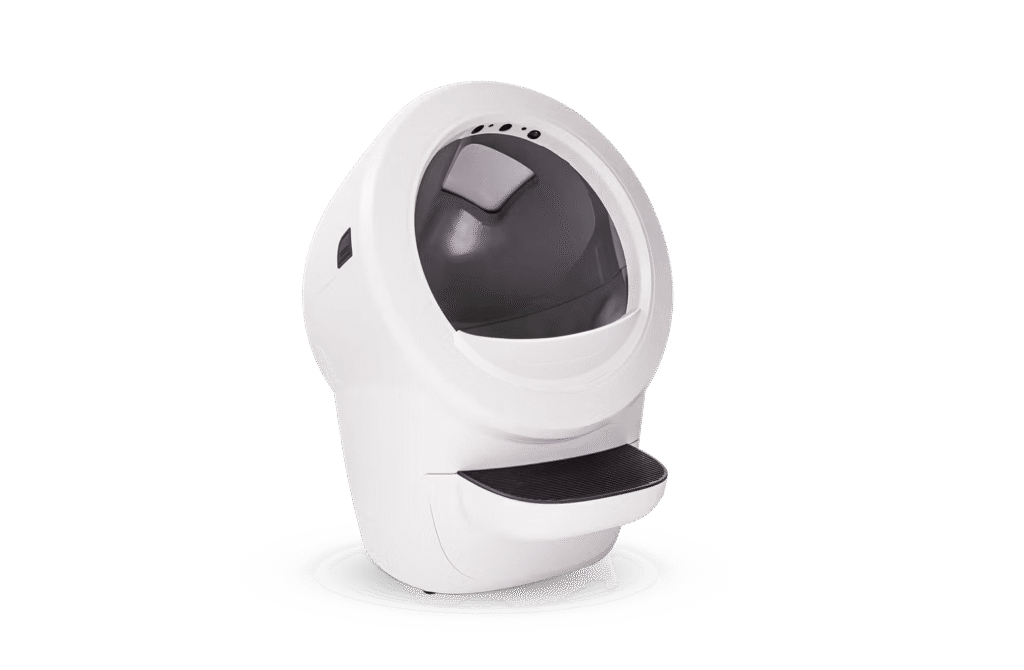
The Litter-Robot 4 is no longer the newest box Whisker makes, and that changes how it should be read. The company now sells the Litter-Robot 5, a 5 Pro and an EVO alongside it, which leaves the 4 as the established model in a lineup that has moved on around it rather than the flagship. What it keeps is the design that made the name: an enclosed rotating globe that sifts clumps through a screen into a sealed drawer in the base, with no rake and no open tray.
The choices that define it are about sensing and litter. Instead of a camera, the unit works out that a cat is inside through optical curtain sensors across the opening and weight sensors in the base. The same scale feeds the Whisker app, which is how it tells cats apart and logs their weight over time. That keeps a lens out of the litter box, a plus if a camera there would bother you, but it also means the app's idea of which cat visited rests on body weight alone.
The litter rule is stricter than on several rivals. Whisker recommends a standard clumping clay, tolerates some crystal litters only if they pass through the screen, and says plant-based litters such as tofu or corn typically do not sift properly. A household already committed to a plant-based litter should settle that question before comparing anything else.
It makes the most sense in a home with adult cats, a hard floor and space for a tall, deep unit. A carpet tray is sold separately for soft flooring. It sits at the expensive end of the category and asks more of a room than a low open design, so Whisker's trial terms and warranty carry a good part of the case for it.
How this VS Score was computed
Score 0: each known spec is measured against the median of all litter boxes (2 products), then weighted; 50 means level with that median. In classes of six or more, a value beyond the class’s 10th–90th percentile range counts as that limit, so one extreme product cannot set the scale. 0% of the scoreable weight could be used; unknown values, features not applicable to this class and proxies (battery capacity where a rated life exists) add or remove nothing.
Not scored: Waste drawer capacity (unknown: not scored); Days between emptying (too few comparable peers (2, need 3)); Cleaning cycle time (too few comparable peers (2, need 3)); Litter compatibility (too few comparable peers (2, need 3)); Odor control (too few comparable peers (2, need 3)); Litter leveling (too few comparable peers (2, need 3)); Safety sensors (too few comparable peers (2, need 3)); Presence detection (too few comparable peers (2, need 3)); Anti-pinch auto-stop (too few comparable peers (2, need 3)); Minimum cat weight (too few comparable peers (2, need 3)); Interior space (unknown: not scored); Entry height (too few comparable peers (2, need 3)); Max cat weight (too few comparable peers (2, need 3)); App control (too few comparable peers (2, need 3)); Health monitoring (too few comparable peers (2, need 3)); Multi-cat recognition (too few comparable peers (2, need 3)); Waste-full alert (too few comparable peers (2, need 3)); Usage log (too few comparable peers (2, need 3)); Bag-lined drawer (too few comparable peers (2, need 3)); Washable globe (too few comparable peers (2, need 3)); Noise level (unknown: not scored).
Editor’s note
What would make me hesitate on the Litter-Robot 4 is not the machine itself but the list of conditions around it. A cat needs to weigh at least 3 lb before the unit can run unattended, so a household with a new kitten will spend weeks running it by hand in Whisker's semi-automatic mode. The Wi-Fi radio is 2.4 GHz only. And translucent or white crystal litter can confuse both the litter-level reading and the drawer-full indicator, which are two of the features the price is paying for.
Get past those and the design holds up well on paper. Whisker says one unit supports up to four cats, and its manual suggests emptying the drawer about once a week for a single cat and twice a week for two, with any 37-49 liter bag working as a liner if you would rather not keep buying the branded ones. The globe itself can be soaked and hosed down, which matters more across a few years of ownership than any app feature. A clean cycle takes around two minutes, and the delay before it starts can be extended for a nervous cat.
The app is where expectations need adjusting. As bought, the app gives a seven-day view of visits and individual weights. Longer history, trend charts and daily recaps sit behind a Whisker+ membership. That is a recurring cost on top of an expensive purchase, so decide up front whether long-term weight trends are something you will look at.
Against the PETKIT Purobot Max Pro 2 the choice is fairly clean. PETKIT pairs weight sensing with a camera that it says separates cats of similar weight and reads urine pH from the clumps, and it accepts tofu litter. The Litter-Robot 4 keeps a camera out of the bathroom, comes with a 90-day in-home trial when bought direct, and includes a one-year WhiskerCare plan that covers accidental damage. I would choose it for a clay-litter home that values the return window and the warranty more than health analytics.
Specifications
Quality bars show where each figure sits between the lowest and highest of the 2 litter boxes this VS Score is measured against.
Cleaning
Safety
Capacity & fit
Smart features
Maintenance
Sources and verification
Where the specifications come from
- Official product pagelitter-robot.com
- Datasheet or manuallitter-robot.com
- Support and firmware documentationlitter-robot.com
- Independent testingcats.com
- Specification database (cross-check)litter-robot.com
- Retailer listing (cross-check)amazon.com
Verification
- First published
- Specifications last checked
- Sheet completeness
- 23 of 26 specifications verified; the rest show as Unknown and are never estimated or scored
- Page type
- Product specification page — Compiled from the manufacturer’s published specifications and the cited sources; this is not a hands-on test.
- Basis
- Research-based: specifications and editorial text were compiled from the documents listed here and the manufacturer’s published data. We have not tested this unit ourselves; where independent measurements are mentioned they belong to the linked publication.
Ratings & reviews
No reviews yet. Be the first to share your experience.
The bottom line
- Who it’s for
- A clay-litter household with adult cats and a hard floor that wants a proven enclosed design, a generous return window and a warranty that covers accidents, and cares less about camera-based health analytics.
- Who should look elsewhere
- Owners who use tofu, corn or other plant-based litter, homes with kittens still below Whisker's weight threshold, or anyone who wants long-term visit history without paying for a membership. Look elsewhere in those cases.
- The trade-off that matters
- Identifying cats by weight keeps a camera out of the litter box, but it can blur per-cat records when two cats weigh about the same, which is exactly the multi-cat home this box is marketed to.
- The main alternative
- PETKIT Purobot Max Pro 2: uses an AI camera alongside weight sensors to tell cats apart and track urine pH, and it accepts the tofu and mixed litters the Litter-Robot 4 does not.
The VS Score is calculated from the weighted specifications above, each measured against the median of comparable litter boxes — a shortlisting guide, not a substitute for your own priorities. See how we score.