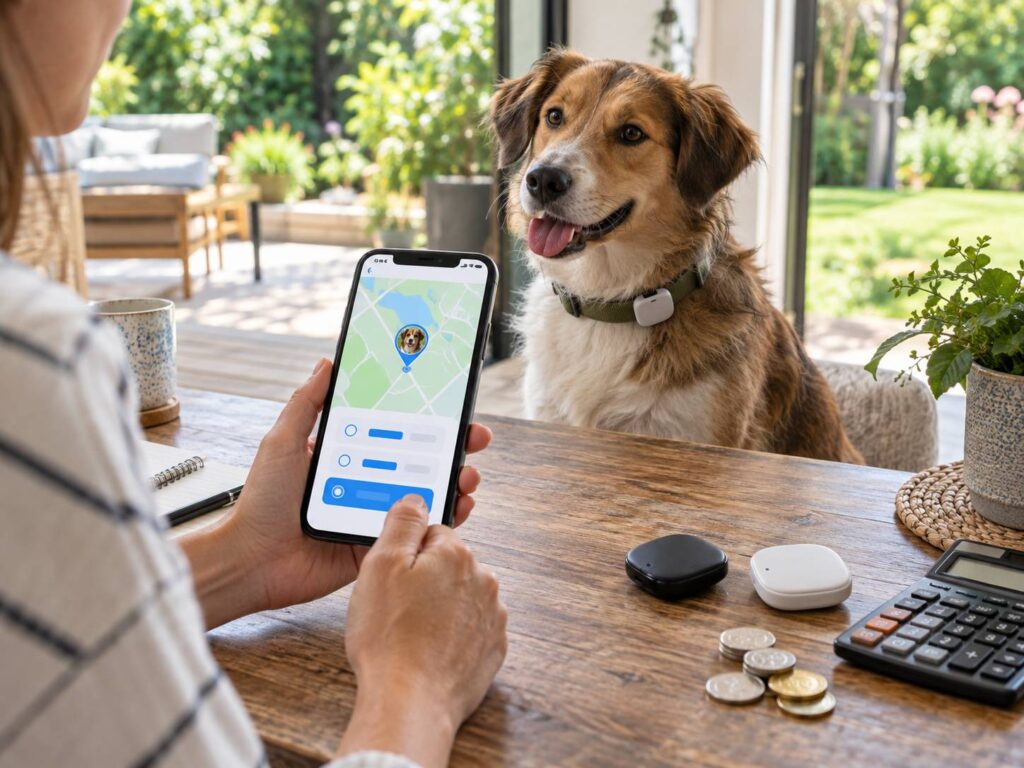
A GPS pet tracker can seem surprisingly cheap at first. Then you reach the subscription page and discover that the device price is only part of the story.
A tracker costing less than $100 can easily exceed $300 after three years of cellular service. Some models come closer to $550. No-fee trackers may cost more upfront, but they can save money if you keep them for several years.
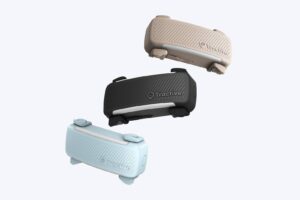
This comparison looks at GPS pet tracker subscription costs for Tractive, Fi, and Pawfit. It also covers PitPat, Aorkuler, and Apple AirTag as subscription-free alternatives.
The calculations use US prices available on September 5, 2026. They cover one tracker and three years of service. Taxes, optional accessories, replacement devices, and temporary discounts may change the final amount.
GPS pet tracker costs over three years
| Tracker and plan | Initial hardware or activation cost | Service needed for three years | Estimated three-year total |
|---|---|---|---|
| Tractive DOG 6 Basic | $79 | $144 for two years + $108 for one year | $331 |
| Tractive DOG 6 Premium | $79 | $168 for two years + $120 for one year | $367 |
| Fi Series 3+ | $20 activation, device included | $339 for two years + $189 for one year | $548 |
| Pawfit Lite Basic | $49 | $114 for two years + $61.80 for one year | $224.80 |
| Pawfit Lite Premium | $49 | $133.20 for two years + $72.60 for one year | $254.80 |
| PitPat GPS | $159 sale price or $229 list price | No required subscription | $159 to $229 |
| Aorkuler Dog GPS Tracker 2 | $249.99 | No required subscription | $249.99 |
| Apple AirTag | $29 | No subscription | At least $29, but it is not a GPS tracker |
These totals assume that current subscription rates remain unchanged. Renewal prices can increase, so a three-year projection is never a guaranteed final price.
Also, each pet usually needs a separate tracker and subscription. If you have two dogs, for example, you may need to double most of these costs.
Why GPS pet trackers charge a subscription
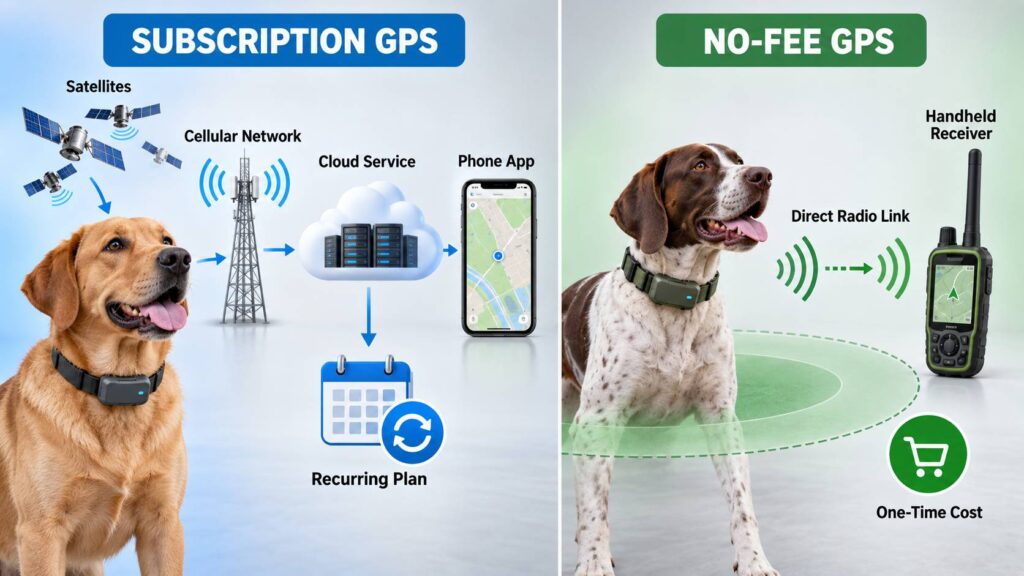
GPS satellites can help a tracker calculate its location, but they cannot send that information to your phone.
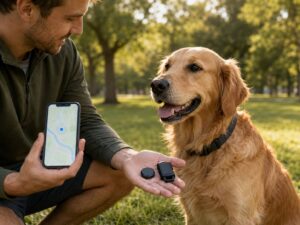
For remote tracking, devices such as Tractive, Fi, and Pawfit use an embedded SIM and a cellular connection. The tracker calculates its position, connects to a mobile network, and sends the location to the manufacturer’s servers. You then see it inside the companion app.
The subscription normally covers several ongoing services:
- Cellular data for the embedded SIM
- Live location tracking
- Virtual fences and escape alerts
- Location and activity history
- App and server maintenance
- Customer support
- Health, sleep, or behavior monitoring
This cellular connection gives the tracker a much wider range than Bluetooth. Still, it does not mean the tracker works everywhere. The device needs compatible mobile coverage to report its location.
Tractive costs between $331 and $367
The Tractive DOG 6 costs $79 before adding a subscription. Buyers can choose between Basic and Premium plans.
The Basic plan currently costs $108 for one year or $144 for two years. The cheapest way to cover exactly three years looks like this:
- Tractive DOG 6: $79
- Two-year Basic plan: $144
- One-year Basic plan: $108
- Total after three years: $331
Premium costs $120 for one year or $168 for two years. Using the same combination brings the total to $367.
Both plans include the main tracking and health features. Premium adds family sharing, worldwide coverage, 365 days of location history, and GPS data export. Basic provides only 24 hours of location history.
For one person using the tracker mainly around home, Basic may be enough. Premium is more useful if several people need access, you travel with your pet, or you want to keep longer location records.
There is another option worth considering. Tractive offers a five-year Premium plan for $300. Add the $79 tracker and the initial payment becomes $379.
That is only $12 more than buying exactly three years of Premium service. Of course, you must commit to five years and pay the full amount upfront. If you expect to keep using Tractive, though, the longer plan offers much better value.
Optional Tractive Care protection costs extra. It covers certain cases involving loss, damage, or theft, so owners of particularly adventurous pets may want to include it in their budget.
Fi has the highest three-year cost
Fi uses a slightly different pricing model. A Series 3+ membership includes the smart collar, but the company charges a one-time $20 activation fee.
Current prepaid membership options include:
- Six months for $99
- One year for $189
- Two years for $339
The least expensive way to cover three full years is to combine one two-year plan with one one-year plan:
$339 + $189 + $20 activation = $548
Buying three separate annual plans would cost $587 after activation. Meanwhile, six consecutive six-month terms would bring the total to $614.
Fi advertises a one-month trial at the time of writing. Since promotional terms can change, the calculations above use the standard paid rates.
The Fi Series 3+ combines GPS tracking, escape alerts, activity monitoring, sleep data, and AI-based health information. It also uses an integrated smart collar, so you may not need to buy a separate holder or attachment.
Even so, $548 is a substantial three-year cost. Fi makes the most sense for owners who specifically value its collar design, battery life, community features, and detailed health information. If you mainly want reliable location tracking, Tractive and Pawfit cost considerably less.
It is also easy to misunderstand Fi’s advertised monthly equivalent. The plans are prepaid. A lower monthly figure does not mean you can necessarily pay that amount one month at a time.
Pawfit is the cheapest subscription-based option
Pawfit offers both Basic and Premium subscriptions. For this comparison, the hardware is the $49 Pawfit Lite, a compact GPS tracker designed for dogs and cats.
The three-year Basic calculation is straightforward:
- Pawfit Lite: $49
- Two-year Basic plan: $114
- One-year Basic plan: $61.80
- Total after three years: $224.80
Premium raises the total to $254.80.
The Basic plan includes live location tracking, safety zones, activity monitoring, family sharing, and 24-hour location history. Premium allows longer recorded walks and provides more frequent updates during those walks.
For everyday location tracking and escape alerts, Basic covers most of the essentials. Premium is more appealing for owners who regularly record long walks or want more detailed route information.
The billing period makes a big difference here. Paying monthly for Pawfit Basic over 36 months would cost $300.60 in subscription fees. Add the tracker and the total rises to $349.60.
Monthly Premium would cost $343.80 over three years. After adding the hardware, the final amount becomes $392.80.
So, choosing the two-year and one-year combination saves $138 on Premium service compared with paying monthly. That is a fairly large difference for the same three-year period.
Are no-fee GPS pet trackers really cheaper?
A tracker advertised without a subscription may use one of several systems. Some manufacturers include cellular data in the hardware price. Others use a direct radio connection instead of a mobile network.
Bluetooth item finders also have no monthly fee, but they work very differently from proper GPS pet trackers.
PitPat includes cellular data in the purchase price
PitPat GPS uses satellite positioning and mobile networks, much like a conventional cellular pet tracker. The difference is that PitPat covers the ongoing mobile data cost.
The tracker currently sells for $159 in the US, reduced from a $229 list price. No subscription is required for live GPS tracking.
That means its three-year cost remains $159 at the current sale price or $229 at full price, assuming the original tracker continues working.
PitPat provides live tracking and effectively unlimited distance wherever it has supported cellular coverage. Still, the device may take up to 90 seconds to wake from its battery-saving state and establish a live connection.
Its rechargeable battery is sealed and cannot be replaced. If battery capacity drops badly after several years, you may eventually need another tracker.
PitPat also relies on the manufacturer’s app, servers, and cellular agreements. No monthly payment does not remove that dependency.
Aorkuler works without cellular service
The Aorkuler Dog GPS Tracker 2 costs $249.99 and requires no subscription. Instead of sending the location through a mobile network, it connects directly to a dedicated handheld controller.
The manufacturer advertises a range of up to 3.5 miles in suitable conditions. This design can work well on farms, hiking routes, and remote land where cellular service is unavailable.
There are tradeoffs, though. Aorkuler cannot offer the same unlimited-distance app tracking as a cellular device. Hills, buildings, dense trees, and other obstructions may reduce its radio range.
Its three-year cost stays at $249.99 if the original hardware lasts. It is a practical option for nearby searches in off-grid areas, but less useful if you want to check your pet’s location from another town.
An AirTag is cheap, but it is not GPS
Apple AirTag costs $29 and has no subscription. It uses Bluetooth and Apple’s Find My network rather than GPS and cellular service.
Nearby Apple devices can detect the AirTag and anonymously report its location. This can work well in a busy neighborhood or city. In a quiet rural area, updates may be delayed because fewer compatible devices pass nearby.
AirTag also lacks true live GPS tracking and cellular escape alerts. So, while it can help recover a collar or provide a last reported location, it is not a direct alternative to Tractive, Fi, Pawfit, or PitPat.
The three-year cost starts at $29. You should also budget for a secure pet collar holder and one or two replacement CR2032 batteries.
An AirTag works best as an extra recovery tool rather than a pet’s main tracker.
Other costs that are easy to overlook
The tracker and subscription are not always the only expenses. Before choosing a model, check the full ownership cost.
Common extras include:
- Activation charges
- Sales tax and delivery fees
- Collar holders and attachment clips
- Replacement straps or charging cables
- Optional loss and damage protection
- Replacement hardware after loss or battery wear
- Higher renewal prices after an introductory offer
- Separate subscriptions for multiple pets
Pet technology often extends beyond location tracking, too. If you are planning a wider connected setup, devices such as the Wopet Castle FT70 should have their own hardware, maintenance, and long-term running costs included in the household budget.
Coverage can create another hidden cost. A tracker may look like the cheapest option, but it offers poor value if it regularly loses its cellular connection around your home, yard, or walking route.
Battery design matters as well. A sealed battery can make a device smaller and more water-resistant. Yet once that battery wears out, replacing the whole tracker may be the only option.
Which GPS pet tracker is cheapest after three years?
Among the true GPS trackers compared here, PitPat has the lowest three-year cost at its current $159 sale price. Pawfit Lite Basic comes next at $224.80, followed closely by the $249.99 Aorkuler system.
Tractive sits in the middle. It costs $331 with Basic or $367 with Premium. Fi Series 3+ is the most expensive option at $548.
Still, the cheapest tracker on paper will not suit every pet.
A cellular model is usually the better choice for automatic escape alerts and long-distance tracking. A radio tracker can be more dependable in places without mobile service. An AirTag costs far less, but it cannot provide the same protection as a proper GPS tracker.
Start by checking which networks and tracking methods work in your area. Then compare battery life, update speed, device size, waterproofing, and app access. Once those basics fit your needs, the three-year cost becomes a much more useful deciding factor.
Finally, keep your pet’s microchip registration and visible identification tag up to date. A GPS tracker helps you follow a moving pet, while a microchip helps someone identify them if the collar comes off.