Ring said on September 16, 2026 that its Neighbours feed and Search Party for Dogs are coming to the UK “starting in October”. If your dog slips its lead or gets out through a gap in the fence, you will be able to post it as lost in the Ring app. Outdoor Ring cameras nearby then check their recent footage for a dog that looks like yours. Starting a search costs nothing. The cameras that do the looking, though, only take part if their owners pay for saved video. Ring has not given a firm launch date, and some UK outlets cite October 21.
How a search runs
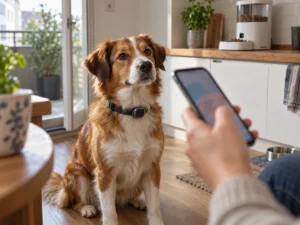
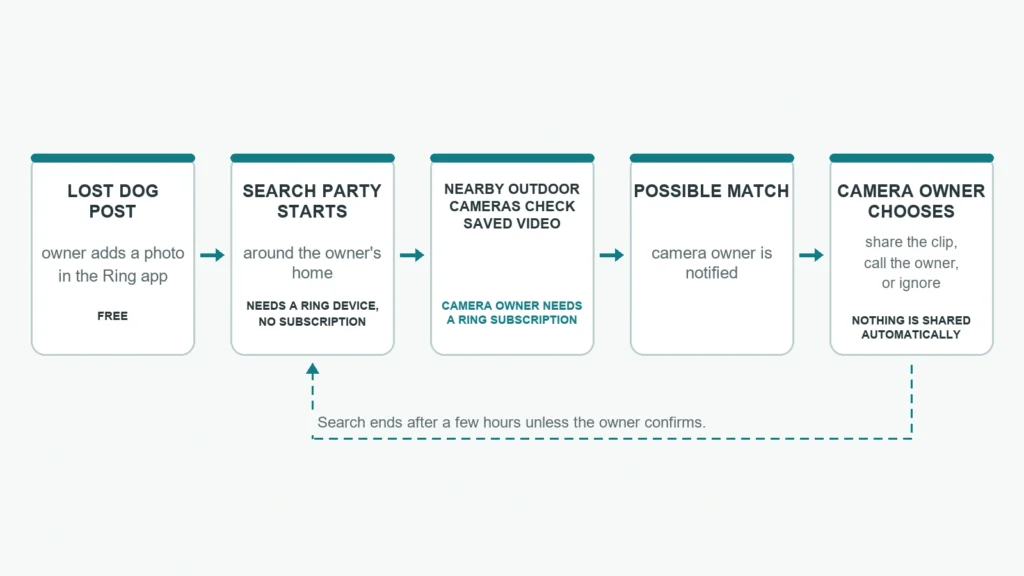
You open the Ring app, tap the Neighbours tile and create a lost dog post with a photo. Ring’s UK page describes what follows. “When a neighbour reports a lost dog in the Ring app, your outdoor cameras use AI to check for possible matches in the area.” A camera owner who gets a possible match receives a notification and decides what to do with it. One tap shares the clip as a comment on your lost dog post, or they can call you.
A search centers on the owner’s home location, and the post is visible to people in the area. Neighbors uses your address to draw a radius around your home, which you can widen or narrow. Searches are temporary. Ring says they “automatically end after a few hours unless the pet owner confirms they’re still searching”, so you have to keep confirming if the dog has not turned up by evening.
It is dogs only for now. Trusted Reviews reports that Ring is looking at other animals such as cats, with no date attached.
Who pays for which part
There are three roles, and the costs sit in different places.
Reading Neighbours and posting in it is free, and you need no Ring hardware. Anyone with an iPhone or Android phone can install the Ring app and join. In the UK, Neighbours lives inside the main Ring app rather than in a separate one, as it does in the US.
Starting a Search Party needs no subscription either. Ring’s FAQ says “Ring users with an active device can initiate a Search Party”, and adds that it plans to open this to people without a Ring device “soon”. Until that happens, a dog owner with no Ring hardware can post a lost dog but cannot set the camera search running.
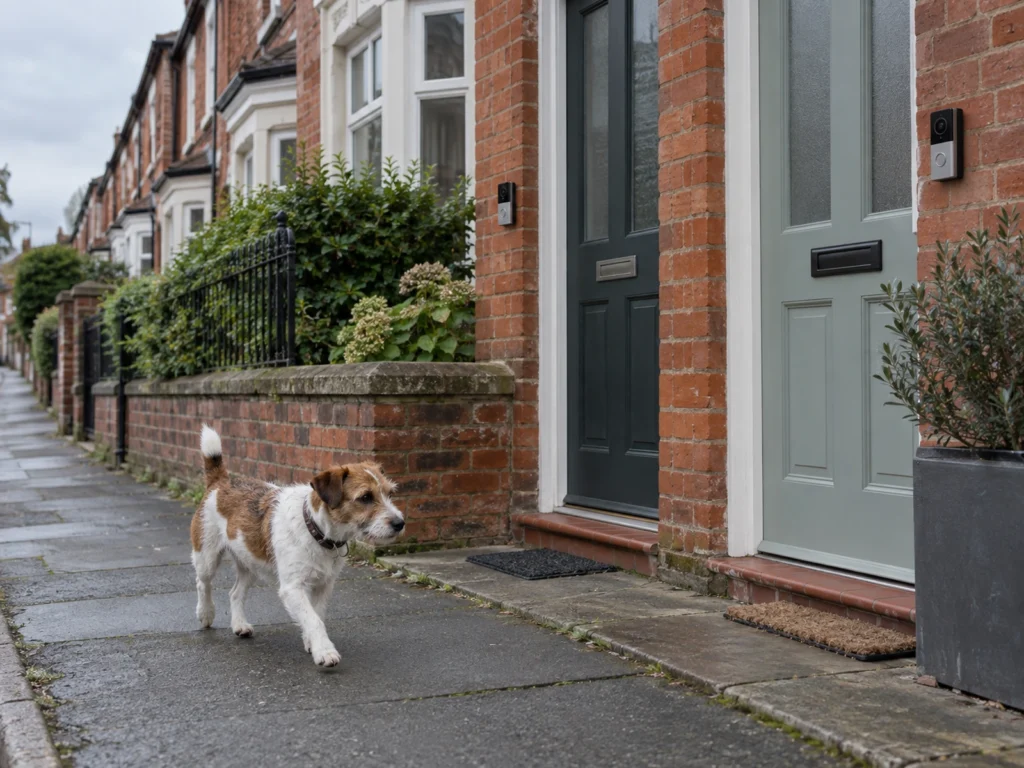
Helping is the paid part. “Search Party works on saved videos, so cameras will only be able to participate in searching for lost dogs if they have saved video history with a Ring subscription.” A Ring doorbell without a plan still sends motion alerts and shows a live view, but it keeps nothing to search.
What Ring says about privacy
Camera owners keep the final say on footage. Ring’s page states that “nothing is shared automatically”, that you can ignore or mute Search Party notifications, and that you can switch the feature off for your whole account or per camera in the app’s Control Centre. On a shared account, only the account owner controls those settings, although other people on the account still receive match notifications and can send clips.
The FAQ is also direct on face recognition. “Search Party for Dogs does not use AI to identify pet owners or people.” According to Trusted Reviews, names and addresses are not shown to other people in the feed, and a Contact Me option lets you be reached without publishing your details. Dave Ward, who runs Ring International, told the publication that posts go through a prompt before publishing and a reporting system with human review.
One part of the UK page deserves a closer read. Neighbors in the UK also carries Community Requests, posts from verified public safety agencies asking for footage during an investigation. Ring says taking part is voluntary and that agencies only see what you choose to send. That feature has nothing to do with lost dogs, but it arrives in the same feed. UK coverage of the launch has pointed to the privacy concerns Ring faces in the US, and it is worth deciding where you stand on police requests before you switch everything on.
How much it can do depends on your street
In the US, Ring claims the feature “now helps find more than one dog per day”. That is Ring’s own figure, with no published count of searches behind it, so it says nothing about the odds for a single lost dog. What decides the odds is how many subscribed outdoor Ring cameras face the streets your dog is likely to run down. On a road where half the houses have Ring doorbells, a search covers a lot of ground. In a village with two, it covers almost none. The UK launch has a partner in Dogs Trust, the country’s largest dog welfare charity, but no partner can put more cameras on your road.
Where it fits next to a chip and a tracker
A microchip is the legal baseline. Dogs in England have needed one since 2016, and the details only help if the database record is current. Our guide to what a pet microchip can and cannot do explains why a chip identifies a dog once someone finds it, but cannot tell you where it is.
Search Party sits between the two. It can turn up a clip of your dog passing a doorbell ten minutes ago, which a chip never will. It still depends on your dog passing a participating camera, and on its owner reading the alert.
A GPS collar answers the question directly. A tracker such as the Tractive DOG 6 reports the collar’s position to your phone over the mobile network, with a monthly subscription of its own. If your dog has a habit of bolting, that is the tool that shows you where it is now. Search Party is a free extra worth switching on alongside it, not a substitute for it.
When the feature goes live, check two things in the Ring app. Confirm that Search Party is enabled for the outdoor cameras you want to take part, and confirm that your plan keeps video history, because without it your cameras cannot help anyone else’s dog either.