PETKIT YumShare Solo 2 Review: A Meal Log for Shared Bowls
If two or three cats share a bowl and you can’t tell who is eating, the PETKIT YumShare Solo 2 is built to answer that. Its camera recognizes each pet by face, up to 15 of them by PETKIT’s count. Every visit gets logged with photos of the bowl before and after. The figures here all come from PETKIT, through its February 2026 manual, its product page and its help center.
The YumShare Dual-hopper 2, PETKIT’s twin-hopper sibling, is the model it’s up against. The Solo 2 has one hopper and one bowl, so its log can show that one cat ate another’s dinner but can’t stop it.
Affiliate disclosure: the price links on this page may earn us a commission at no extra cost to you. Retailers cannot pay for placement or influence the score. How we stay independent
RecommendationConsider if several cats share one dry food and you want to know which one stopped eatingEvidence: maker figures, some of them conflicting · Specification score on the product page
Face recognition turns one shared bowl into a dated record of which cat ate and how much. That record is worth paying for in a house where two or three cats eat the same dry food.
Strengths
Face recognition logs which pet ate, with no collar tag
Pauses the next meal while food is still in the bowl
Meals keep coming when the Wi-Fi drops
Weaknesses
Backup needs five AAA alkaline cells that aren't in the box
Camera is off whenever it runs on batteries
One bowl, so it can't keep a cat away from another's food
Research-based: assessed from the manufacturer’s published specifications, documentation and the independent sources listed at the end. We have not tested this unit ourselves; any measurement quoted belongs to the cited source.
Method
PETKIT's February 2026 user manual gave the battery type, the Care+ limits, the cleaning steps and the dimensions used in the power and cleaning sections. PETKIT's product page gave the recognition and bowl-check claims, the portion figures and the two-week and 15-day ratings. Its FAQ is where the D-battery instruction appears. A PETKIT help center article on the YumShare feeders supplied the 7-day playback trial.
Evidence
Every figure comes from PETKIT: the manual for the batteries, Care+ and cleaning, and the product page for recognition, portions and the backup and capacity ratings.
Limitations
We have no independent measurement of the camera's recognition, the battery runtime or the portion accuracy. Where PETKIT's documents disagree on portions and backup batteries, the manual and the spec block are taken as correct.
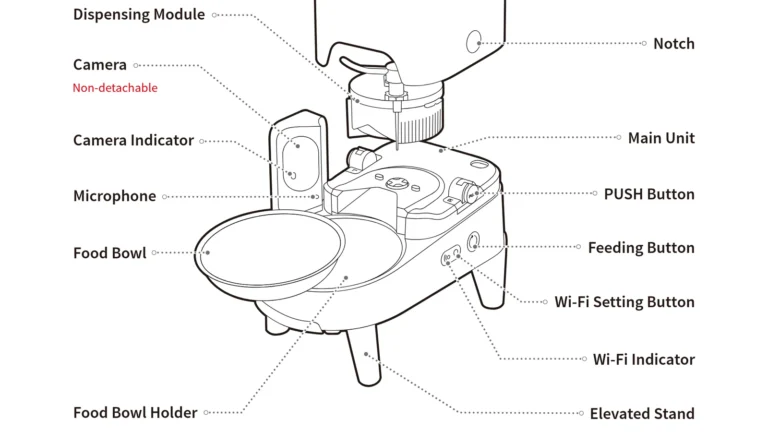
The Solo 2's parts as PETKIT's manual labels them, with the camera on its post beside the bowl. Figure: PETKIT YumShare Solo 2 user manual (V1.1, February 2026), authentic crop
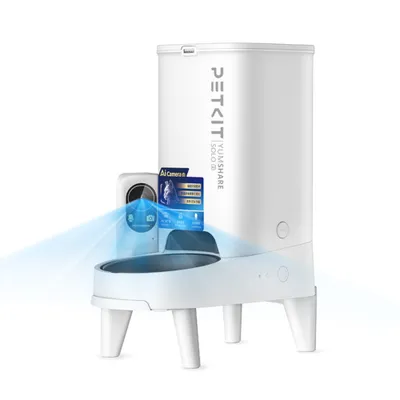
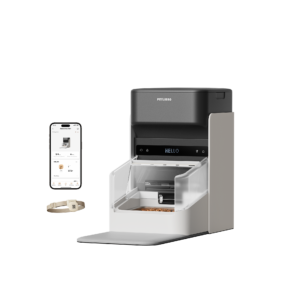
The camera sits on a post beside the bowl. PETKIT says it tells pets apart by face, without a collar tag. Each visit is logged with the time, how long the cat stayed and how much it ate. The same camera watches the food level. Set a limit in the app, and the feeder pauses the next scheduled meal while food is still sitting there. Fresh kibble doesn't land on top of yesterday's.
In a house where three cats share one bowl, the log can show that one of them has eaten less all week. A timer feeder can't tell you that. The Solo 2 can't act on what it sees, though. There's one hopper and one bowl, and any cat that reaches the bowl can eat what's in it. If one cat is on a prescription diet, this feeder will only record that another cat ate it. A feeder that opens for one cat's tag is the tool for that job.
Without a PETKIT Care+ plan, the manual says the timeline shows still pictures only. Full clips, sped-up highlights and HD moments need the plan. PETKIT's help center adds a 7-day free trial of playback when the feeder is first set up. The manual also lists pet detection among the Care+ services. Neither it nor the product page says which per-cat records stay free after the trial. Ask PETKIT support before counting on the face log without a plan. We'd buy the Solo 2 for the photo timeline and the bowl check, and treat clip playback as an extra.
One tap switches the camera off, or it can run only during the monitoring hours you set. The manual says feeding plans keep running with the camera off. PETKIT also says the footage is end-to-end encrypted, so PETKIT itself can't watch it.
Power cuts and the batteries PETKIT doesn't include
Not rated · Evidence: conflicting sources
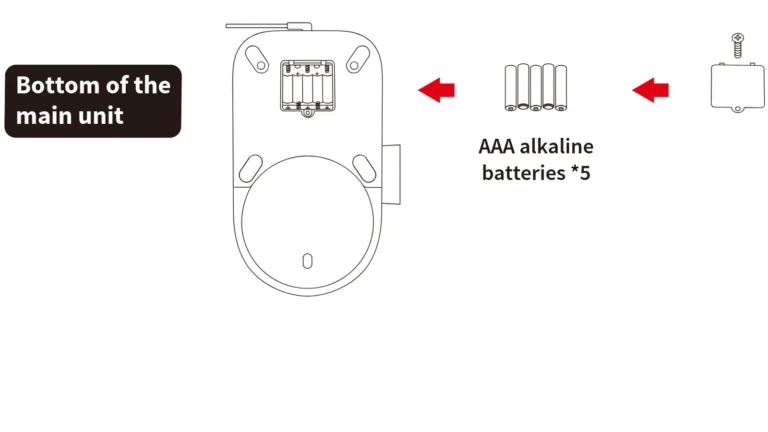
The battery tray under the base, from the installation steps in PETKIT's manual. Figure: PETKIT YumShare Solo 2 user manual (V1.1, February 2026), authentic crop
PETKIT's product page promises a built-in battery that keeps meals on schedule for up to two weeks. Nothing is built in. Both the spec block on that page and the manual call for five AAA alkaline batteries, sold separately. They go in a tray under the base, and only alkaline cells work, the manual adds. Then the page's FAQ asks for four D batteries, which no other PETKIT document for this feeder mentions.
Buy the batteries with the feeder, because the manual has you fit them before clipping on the raised stand. Without them, a power cut stops the meals.
With batteries in, the meals continue and the camera doesn't. PETKIT says the camera is disabled in battery mode, and the manual says its indicator light goes out. So an outage is the one stretch when the Solo 2 can't show you the bowl. An owner checking in from a trip sees nothing until the power returns. The two-week figure is PETKIT's rating, and the manual's advice is to check them before a long absence.
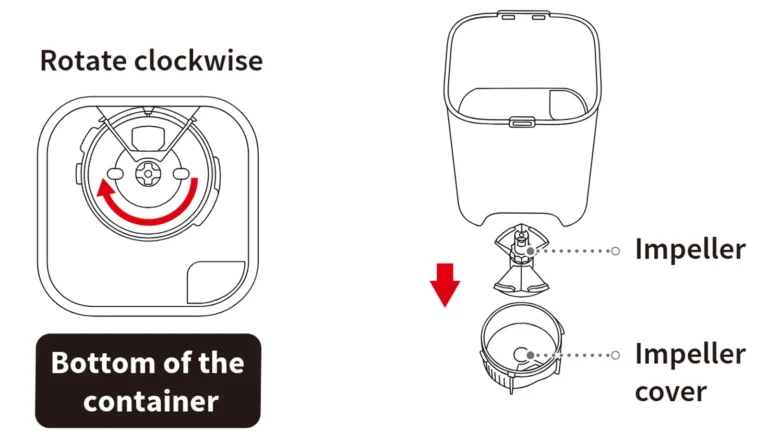
The dispensing parts under the hopper coming apart for washing, as PETKIT's manual draws them. Figure: PETKIT YumShare Solo 2 user manual (V1.1, February 2026), authentic crop
Only dry food goes in: kibble up to 12 mm across and freeze-dried pieces up to 9 mm. Wet food is out. The hopper holds 3 liters, about 12 cups. PETKIT's 15-day figure for one pet works out to about four-fifths of a cup a day. Two cats eating that much empty it in about a week.
The spec block on PETKIT's product page allows up to five portions per meal, at 10 grams each. The FAQ on the same page says up to 10 portions. Plan meals around the 50-gram ceiling until PETKIT settles it. The app schedules up to 10 meals a day.
The hopper lifts off with the two PUSH buttons, and the dispensing vanes pull out without tools. Turn the impeller cover clockwise and the impeller comes free. PETKIT's manual says to wash those parts, the lid and the bowl with detergent, then let them dry completely. The main unit stays out of the water: wipe it with a damp cloth and never soak it. No dishwasher is mentioned, so wash by hand.
The manual also asks you to hide the power cord from chewing. Stand the feeder against a wall or in a corner, it adds, so a pet can't knock it over. The raised stand comes in the box, and PETKIT rates the feeder for cats and small-breed dogs.
PETKIT's twin-hopper model holds 5 liters across two hoppers and serves up to 10 portions from each per meal. PETKIT rates its backup at 60 days. Take it for two foods or a long trip, and accept a bigger, heavier feeder.
Keeps the food covered until the right cat's tag reaches the reader, which is the job the Solo 2's camera can only watch. The trade is one feeder per tagged cat.
We have no current price for the PETKIT YumShare Solo 2 with Camera Smart Pet Feeder, model P572, white, US version: no retailer listing is on record for this exact model at the moment, so check the maker’s site or a retailer directly.
Prices and availability come from retailer feeds and change without notice; the retailer’s page is authoritative. We may earn a commission if you buy through these links.
✓
Final verdict
PETKIT YumShare Solo 2 with Camera Smart Pet Feeder, model P572, white, US version
RecommendationConsider if several cats share one dry food and you want to know which one stopped eating
This review gives no score out of 10, because no section rests on a measurement by an independent body. The recommendation and the written verdict stand on their own.
Pros
Face recognition logs which pet ate, with no collar tag
Pauses the next meal while food is still in the bowl
Meals keep coming when the Wi-Fi drops
Camera turns off with one tap or on a schedule, and feeding carries on
Cons
Backup needs five AAA alkaline cells that aren't in the box
Camera is off whenever it runs on batteries
One bowl, so it can't keep a cat away from another's food
Clip playback after the free week needs a Care+ plan
PETKIT's pages disagree on portion sizes and backup batteries
Dry food only
Conclusion
PETKIT built the Solo 2 around one question, which cat ate. The feeder underneath is plain, with a sealed hopper, a raised bowl and parts that come apart for washing. PETKIT's paperwork is weaker than the hardware. Its product page calls five store-bought AAA cells a built-in battery, and its FAQ asks for D cells. That leaves the manual as the one document to trust on power and on what Care+ adds.
Our take
For two or three cats on one dry food, the Solo 2 is a good buy on its photo timeline and bowl check alone. Care+ can stay optional. It is the wrong buy for a home that has to keep one cat out of another's food, because the camera only records what happened.
Best for
Multi-cat homes on one dry food
Owners who want a dated record of each cat's meals
Small dogs on kibble
Consider an alternative if
You have a cat on a prescription diet the others must not eat
Does the PETKIT YumShare Solo 2 need a subscription?
Not for feeding. PETKIT's manual says the timeline shows still pictures without PETKIT Care+, and full video clips need the plan once the 7-day playback trial ends.
What batteries does the YumShare Solo 2 take?
Five AAA alkaline batteries, bought separately and fitted in a tray under the base. PETKIT's manual says only alkaline cells are supported, and the camera turns off while the feeder runs on them.
Andreea reads the site’s articles, guides and reviews before they are published.
This is a research-based assessment: the reviewer compiled it from published specifications, documentation and independent measurements rather than from testing the unit.
ConsiderPETKIT YumShare Solo 2 with Camera Smart Pet Feeder, model P572, white, US versionWhere to buy
Cookies on PetTechScout
We keep cookies to a minimum. Without your consent, this site sets only the ones it needs to work: remembering your answer here and keeping the site secure. If you allow analytics cookies, Google Analytics counts visits and shows us which pages people read. If you allow functional cookies, two optional features can use them: Google sign-in for posting a review, and remembering embedded videos you choose to always show. The site is also set up for Google AdSense ads; the cookie policy explains how Google uses cookies once ads run. Cookie policy
Customise consent preferences
Each category below lists the exact cookies behind it, what they do and how long they last. Strictly necessary cookies cannot be switched off because the site would stop working without them. Anything else is yours to decline.
NecessaryAlways active
Strictly necessary cookies keep the site working and secure: they remember your choice here, help the security layer stop attacks and keep site accounts signed in to the admin area. The site cannot run without them.
Show the cookies in this category (10)
cmp_consent
PetTechScout · 1 year
Remembers your consent choice for each cookie category, so the banner does not ask again on every page.
cmp_visitor
PetTechScout · Session (until you close the browser)
Marks your browser as a real visitor, so a comparison page is built when someone actually opens one rather than when a crawler passes through. It holds the value 1 and nothing else: no identifier, no history.
__cf_bm
Cloudflare · 30 minutes
Tells automated traffic from real visitors at the security layer that sits in front of this site. It holds a bot score, not an identity, and is not used for advertising.
cf_clearance
Cloudflare · Set by Cloudflare (typically 30 minutes)
Records that your browser passed a security check, so you are not challenged again on every page. Set only if a check was shown to you.
wp-settings-(id), wp-settings-time-(id)
WordPress · 1 year
Remembers layout preferences inside the WordPress admin screens. Set only for accounts that sign in to run the site, never for ordinary visitors.
WordPress · Session, or 14 days if “Remember me” is ticked
Keeps a site account signed in to the WordPress admin, and checks that the browser accepts cookies at login. Set only for accounts that sign in to run the site, never for ordinary visitors.
wfwaf-authcookie-(hash)
Wordfence (Defiant, Inc.) · 12 hours
Lets the Wordfence firewall check a signed-in user’s access level before WordPress loads, so administrators are not blocked by firewall rules. Set only when you log in to the site.
wf_loginalerted_(hash)
Wordfence (Defiant, Inc.) · Persistent
Records that the administrator has already been alerted about a sign-in from this device. Only used if login alerts are enabled, and set only when you log in to the site.
wfCBLBypass
Wordfence (Defiant, Inc.) · Only if enabled
Allows a visitor who knows a hidden bypass address to pass country blocking. It is only used if country blocking is enabled, and we do not currently use it.
wfls-remembered-(hash)
Wordfence (Defiant, Inc.) · Up to 30 days
Remembers a trusted browser for two-factor login when a signed-in user chooses “remember this device”. Set only for site accounts that use two-factor authentication.
Functional
Functional cookies are set only when you use a feature that needs them: signing in with Google to post a review, or ticking “Always display content from …” on an embedded video or post. Decline and the rest of the site works exactly as before: Google sign-in stays off, and embedded videos still load one at a time when you click them.
Show the cookies in this category (2)
g_state (and Google’s own sign-in cookies)
Google · Set by Google
Set only if you use the Google sign-in button to post a review. It remembers the state of that prompt so it is not shown again. Governed by Google’s own policy.
embed-privacy
PetTechScout · 1 year
Remembers the providers whose embedded content you chose to always display (for example YouTube), so their videos and posts load without a click. Set only when you tick “Always display content from …”, a box that appears only once functional cookies are allowed.
Analytics
Analytics cookies let Google Analytics count visits and show us which pages people read and how they found them, so we know what to improve. Google Analytics loads only after you switch this on. Google signals and ad personalization are turned off, and Google Analytics does not log or store IP addresses. Decline and the site works exactly the same.
Show the cookies in this category (2)
_ga
Google (Google Analytics) · 13 months
Gives your browser a random ID so Google Analytics can tell new visitors from returning ones. It holds no name, email address or account. Set only after you allow analytics cookies.
_ga_EX5QH7JLFF
Google (Google Analytics) · 13 months
Keeps track of the current visit for this site’s Google Analytics property, such as when it started and how many pages it covered. Set only after you allow analytics cookies.
Advertising (Google AdSense)
This site is set up for Google AdSense. No ads are shown until Google approves the site. In the EEA, the UK and Switzerland, Google asks for your consent in its own message before it uses advertising cookies, and that message also decides Google Analytics there. Elsewhere, you can turn off personalized ads in Google’s ad settings.
Show the cookies in this category (2)
FCCDCF, FCNEC
Google (consent message) · Up to 13 months
Stores the choices you make in Google’s consent message, which visitors in the EEA, the UK and Switzerland see, so the message does not appear on every page.
__gads, __gpi, __eoi
Google (AdSense) · Up to 13 months
Used by Google AdSense to show ads, limit how often you see the same ad and detect fraud. Set only on pages that show an ad; no ads are shown until Google approves the site.
Set by other sites
These are set by another company, not by this site: a retailer, after you click through to its website, or a video or social-media provider, after you click to load its content here. That company’s own policy governs them, not this banner.
Show the cookies in this category (2)
Embedded video and social-media cookies
YouTube, Vimeo, TikTok, Instagram, Spotify, X, Reddit · Set by the provider
Articles can embed a video or post. Nothing loads from the provider until you click its placeholder; when you do, the provider may set or read its own cookies under its own policy. YouTube videos load in YouTube’s privacy-enhanced mode (youtube-nocookie.com).
Retailer / affiliate cookies
Amazon & affiliate networks · Set by the retailer
Set on the retailer’s own website after you click a “View deal” or “Check price” link, to attribute a purchase. We do not set or read these.