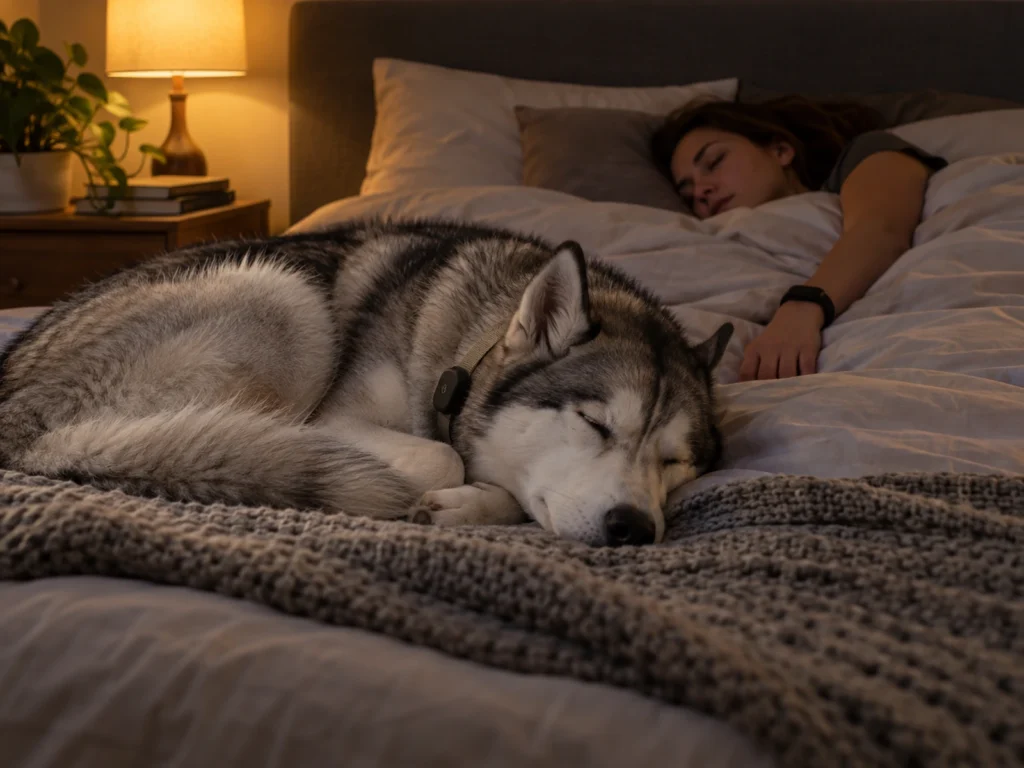
Letting the dog sleep on the bed did not cost owners any measurable sleep in a study published in PLOS One on October 7. Researchers at the University of Toronto put the same motion sensor on the wrists of 25 owners and the collars of their 38 huskies and malamutes for about four weeks. Owners who shared the bed slept no less, and no less efficiently, than owners who never did. When owner and dog stirred within a few minutes of each other, the owner moved first more often than the dog. If your dog’s collar app shows a restless night, your own night is the first thing to check.
What the sensors recorded
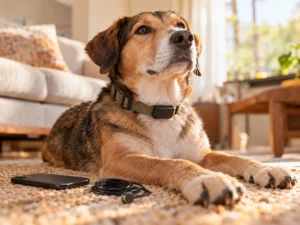
Each owner wore a CamNtech MotionWatch 8, a research-grade activity sensor, on the wrist of the non-dominant hand. Each dog wore the same sensor on a nylon collar. Both logged movement once a minute between November 2 and December 9, 2021, in southern Ontario, while COVID-19 lockdown rules were in force, so the kits were mailed to the owners and fitted at home.
The study took only huskies and malamutes aged two to 12, because it was part of a larger project comparing dogs with wolves and a single breed group removes breed differences in activity. Twenty-one of the 25 owners were women. Two pairs were dropped for incomplete data, which left 36 owner and dog pairs, since 13 owners had more than one dog.
The owners slept 6.23 hours a night on average. Their sleep efficiency, the share of the time between lights out and getting up spent asleep, averaged 79.31%. On the Pittsburgh Sleep Quality Index, a standard questionnaire on which 5 and above indicates poor sleep, they averaged 6.84, and the authors suggest the stress of lockdown may be part of the reason.
Bed or floor made no measurable difference
Four owners said they always slept with their dog on the bed, 10 sometimes and 11 never. Across 777 nights of owner data, none of those arrangements changed how long owners slept or how efficiently, and neither did sharing the bed with another person.
The dogs showed the same pattern across 1,093 nights. Where they slept, how many people lived in the house, whether there were other dogs and how many meals they got a day made no significant difference to how much they moved at night.
Owners with more than one dog rated their own sleep worse on the questionnaire, while their wristbands showed no difference. The authors point out that this questionnaire model as a whole was not statistically better than one with no predictors at all, which makes the multi-dog result a weak one.
Ten pairs against four
The claim that owners disturb their dogs more than the reverse comes from a minute-by-minute comparison inside each pair. The researchers looked for moments when owner and dog became active within five minutes of each other, and for which of them led.
In 14 of the 36 pairs they found no link at all. Of the other 22, the owner moved first in 10, the two moved within the same minute in 8, and the dog moved first in 4. The 45% and 18% figures in the paper’s summary are shares of those 22 pairs. Counted out, the finding is ten pairs against four, in two northern breeds.
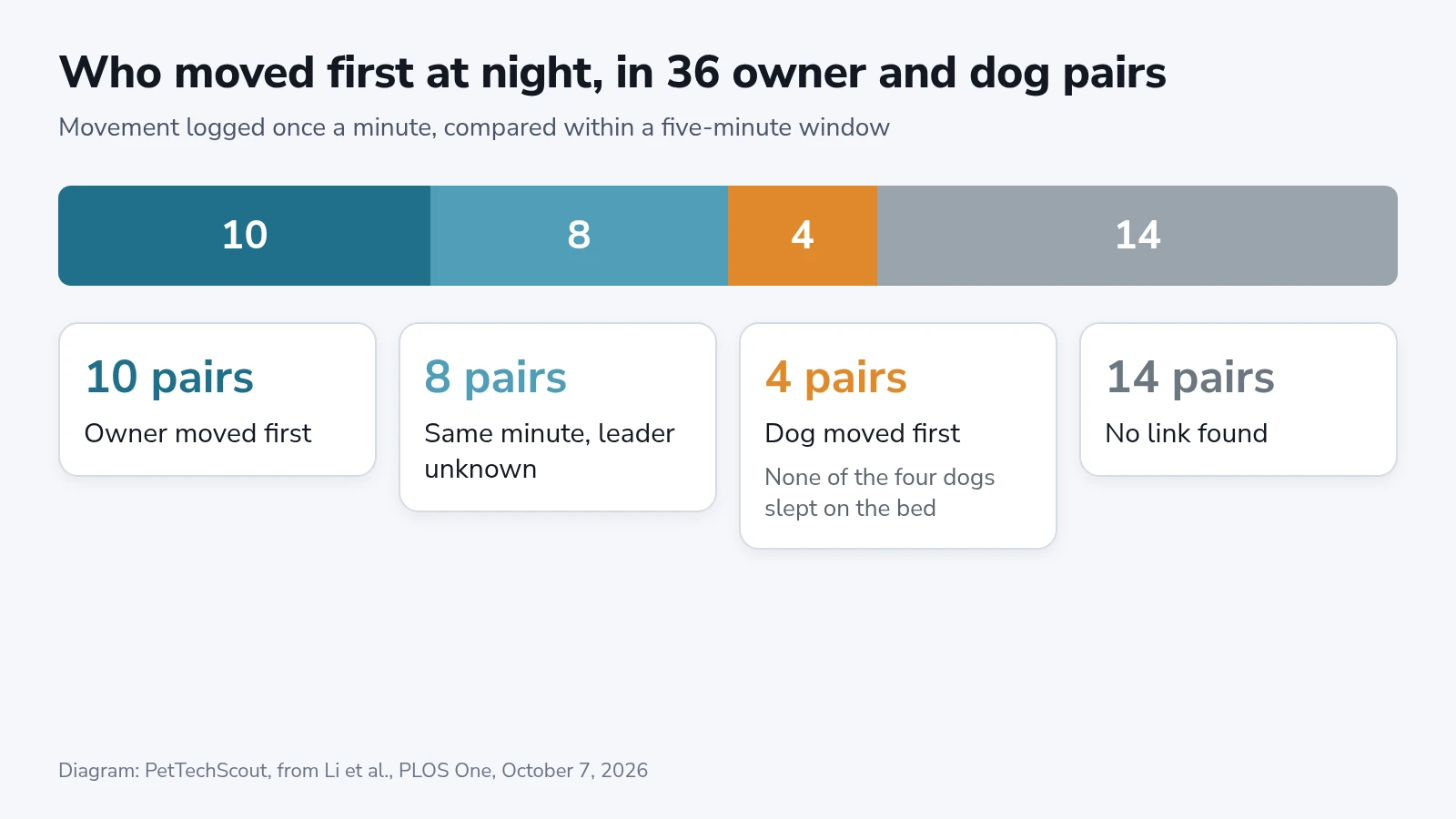
None of the four dogs that moved first slept on the bed. Of the three always-bed-sharing pairs with a link, the owner moved first in two and the two moved together in the third. The authors read this as a hint that a dog sleeping farther away is more likely to be the one that wakes its owner, while a dog on the bed mostly reacts when the owner turns over or gets up. Four pairs is a thin base for that, and nobody recorded what the movements were.
Most owners did not feel woken. Of the 25, 88% said barking did not interrupt their sleep and 84% said the noise of the dog moving did not. Asked how often their dogs woke them at night, 14 said never, nine said once or twice, and two said more than twice.
Reading the night chart on a smart collar
The researchers did not call the dogs’ quiet minutes sleep, because the MotionWatch 8 has not been validated for telling a dog’s sleep from wakefulness. They wrote “activity” and “inactivity” instead and coded any movement in a minute as active. A paw twitch, or a dreaming dog paddling its legs in REM sleep, counted the same as a dog getting up, which the authors say may overstate how active the dogs were.
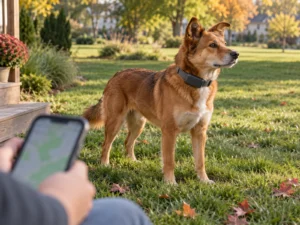
Consumer collars turn the same kind of motion data into sleep charts. The Fi Series 3+ logs sleep and naps along with steps, barking and scratching, and Fi describes comparing a dog’s downtime with other dogs on its US network. Fi has not published how its collar tells a dog shifting position from a dog waking up.
In this study the dogs’ night activity rose and fell with their owners’. A late trip to the bathroom or a night of tossing in bed can show up on the dog’s chart too, so check the household’s night before reading anything into one restless reading. Several restless nights in a row, while your own nights were calm, is the pattern worth noting for your vet.
What the study leaves open
There was no group of people without dogs, so the study cannot say whether owning a dog changes sleep at all, only whether the dog’s place in the room does. The oldest dog was 11 and the average age was 4.8, and older dogs are barely represented.
The eight same-minute pairs are the part a one-minute sensor cannot settle. The authors want the next study to record every 5 or 10 seconds and to add video and noise monitoring, which would show who started those bouts and what the owner was doing when the dog stirred.